
Moving Tips
Dissemble Furniture Meaning: What It Really Means to Take Furniture Apart for a Move
Written by:
Advanced Technical Moving Team
Published:
October 12, 2026
Confused by the dissemble furniture meaning? Learn what it really means, which pieces need it, and how to do it safely before your next move.
The dissemble furniture meaning is simple: it refers to taking furniture apart into smaller, separate pieces, usually by removing legs, shelves, headboards, or panels, so a piece can move safely through doorways, down stairs, or into a truck. Most people searching this phrase actually mean "disassemble," the more standard spelling, but both point to the same task: breaking a large item down before a move so it is lighter, narrower, and less likely to get damaged.
If you have ever wondered why a mover asks whether your bed frame or sectional needs to come apart first, this is exactly what they mean. Understanding the term, and when it applies, can save you time, protect your furniture, and prevent a stressful scramble on moving day.
What Does "Dissemble" Mean When It Comes to Furniture?
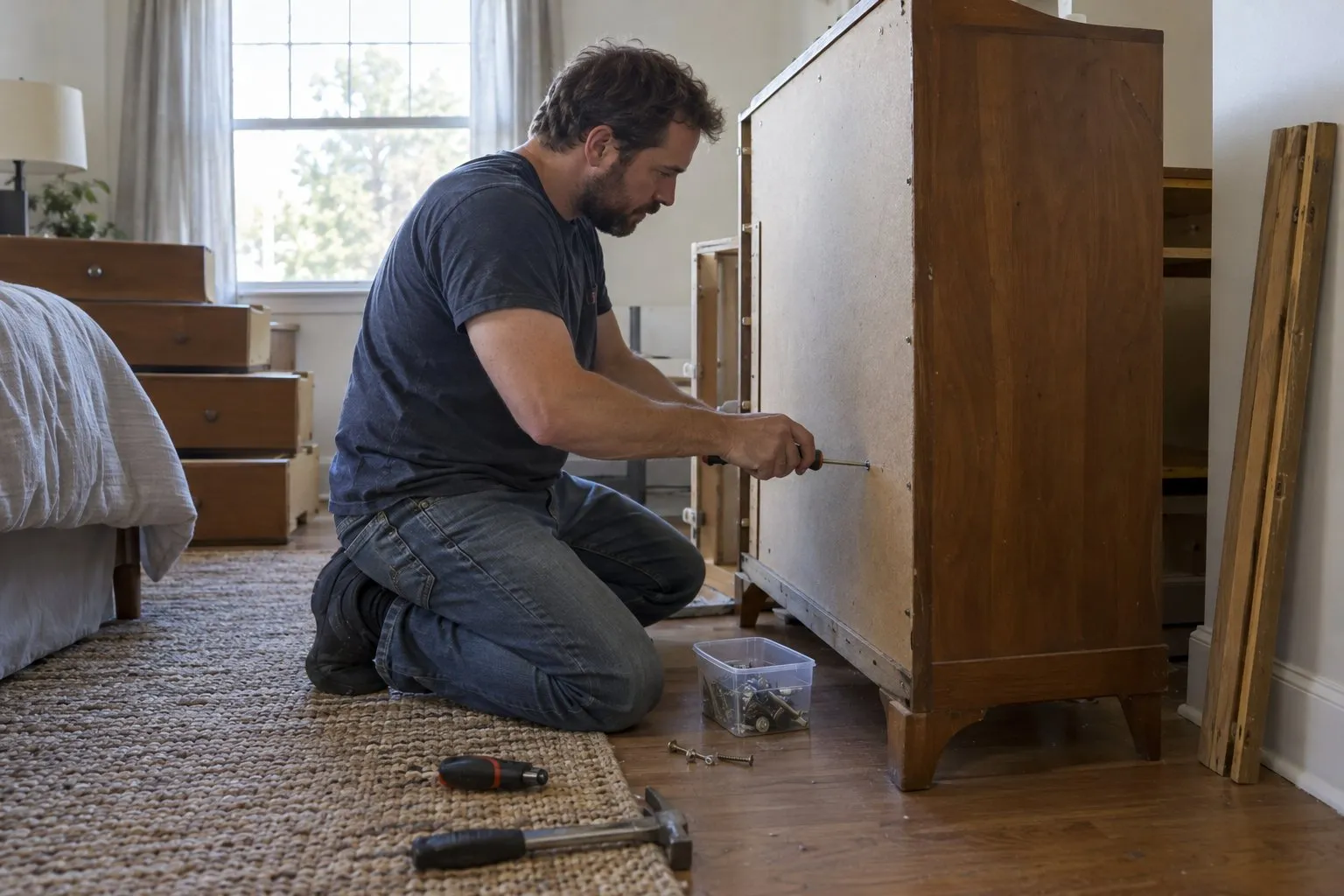
In the context of moving, "dissemble" (more correctly "disassemble") means separating a piece of furniture into its individual components using the same tools and steps it took to build it, just in reverse. It does not mean damaging or discarding the item. It means temporarily reducing it to parts that are easier to carry, wrap, and load.
The confusion comes from the word "dissemble," which in standard English actually means to disguise or conceal the truth, as in "he dissembled his true intentions." That word has nothing to do with furniture. When people search "dissemble furniture meaning," they are almost always looking for "disassemble," which means to take something apart. Movers and moving guides use the two interchangeably, but only "disassemble" is technically correct.
Which Furniture Actually Needs to Be Taken Apart?
Not every piece in your home needs to be broken down. As a general rule, anything too large to clear a doorway, stairwell, or elevator intact, or anything with parts that flex and could crack under their own weight during transport, should be disassembled first. Here are the most common candidates:
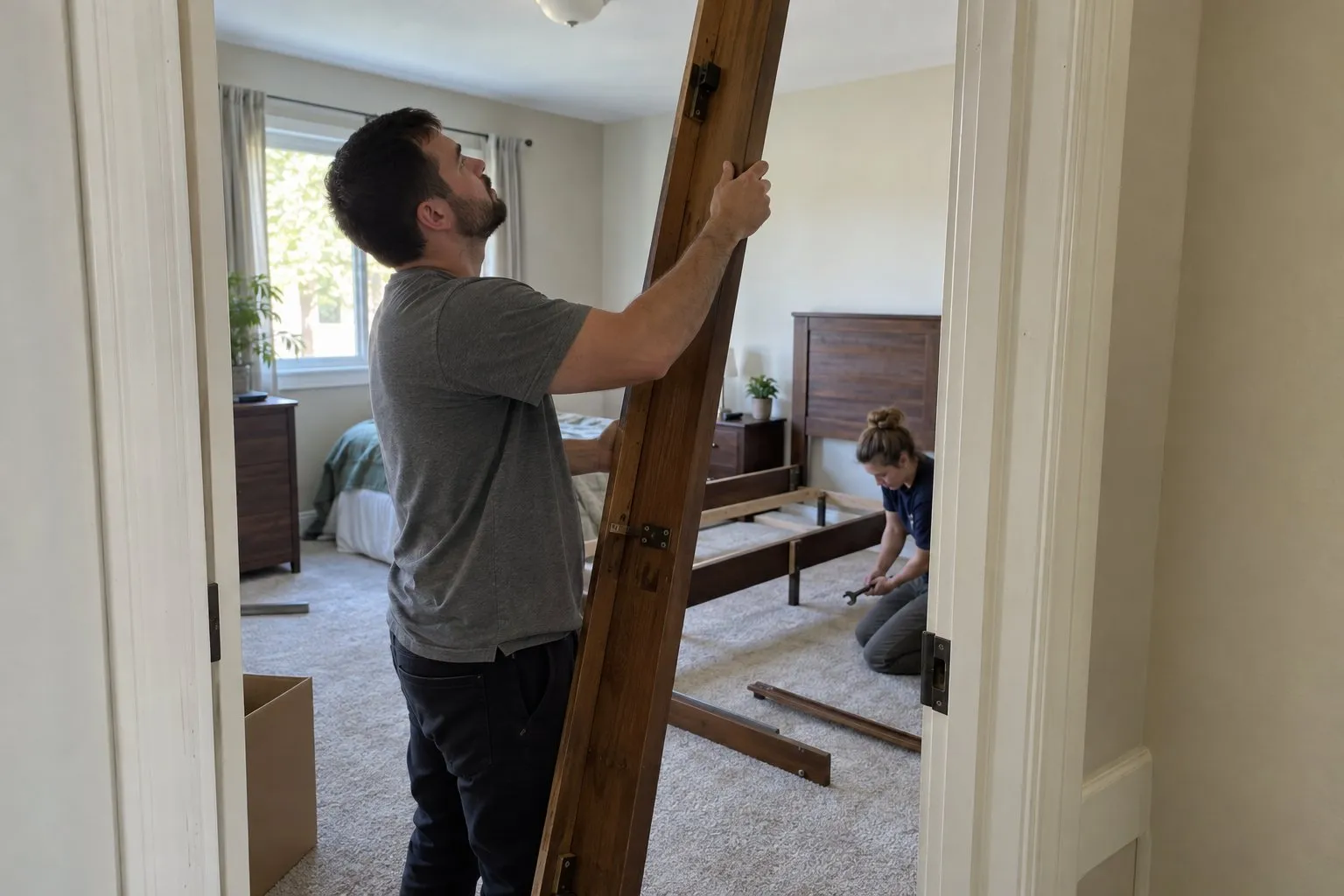
- Bed frames: Headboards, footboards, and side rails almost always need to be separated, especially metal frames, which can bend if moved in one piece. If you are furnishing a new place and weighing frame types, our guide on moving metal versus wood bed frames covers how each style holds up during transport.
- Dining tables: Table legs are usually removable and should come off to protect the tabletop and reduce bulk.
- Bookshelves and wardrobes: Tall units with removable shelves or doors move more safely in sections.
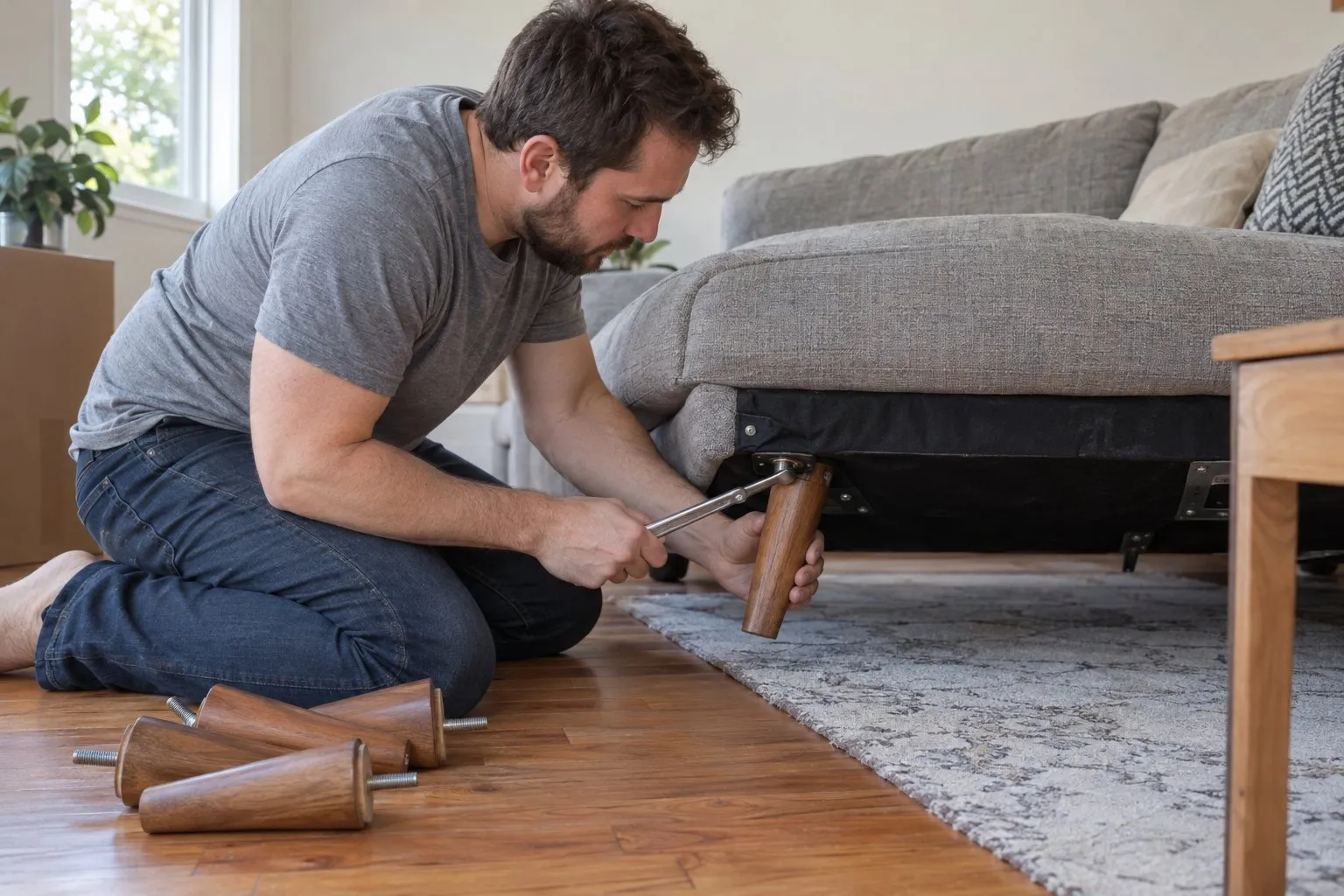
- Sectional sofas: Most sectionals are built in modular pieces that detach at the connector brackets, which makes them far easier to carry than one solid couch.
- Desks with hutches or add-on components: Separating the hutch from the base prevents stress on the joints.
Solid dressers, nightstands, and most upholstered chairs typically do not need to be taken apart, they just need careful wrapping and lifting.
How to Disassemble Furniture Without Damaging It
Disassembling furniture correctly comes down to working slowly, keeping hardware organized, and documenting each step before you start. Rushing this part is where most moving-day furniture damage actually happens.
Tools You'll Likely Need
- A set of screwdrivers (flathead and Phillips)
- An adjustable wrench or Allen key set (many modern furniture pieces use hex bolts)
- A power drill with the right bits, if you have a lot to take apart
- Resealable bags or small containers for screws, bolts, and brackets
- Painter's tape and a marker for labeling parts
Steps to Follow
- Take a photo of the assembled piece from a few angles before you start, so you have a reference for reassembly.
- Remove drawers, shelves, and glass inserts first and wrap them separately.
- Label each bag of hardware with painter's tape noting which piece it belongs to.
- Tape small loose parts (like shelf pegs) directly to the furniture piece they came from, inside a bag, so nothing gets separated in transit.
- Keep an inventory list of disassembled items so nothing gets left behind during loading.
Is It Better to Hire Movers to Disassemble Furniture or Do It Yourself?
Whether you should DIY this step depends on how complicated the furniture is and how much time you have before moving day. Simple items like bed frames or basic tables are usually manageable on your own with the right tools. Modular sectionals, antique pieces, or furniture with hidden fasteners are safer left to professionals who disassemble these items regularly and know how to avoid stripping screws or cracking old joints.
If you are already feeling overwhelmed by everything else on your plate, bundling disassembly into your move can be worth it. Our local moving service includes furniture disassembly and reassembly as needed, which means you do not have to track down an Allen key the night before your move.
Common Mistakes People Make When Taking Furniture Apart
Most disassembly mistakes come down to poor organization rather than lack of skill. The furniture itself rarely gets damaged during the actual unscrewing, it gets damaged (or lost) afterward, during transport and reassembly.
- Mixing hardware from different pieces: This is the number one cause of reassembly headaches. Keep every piece's hardware in its own clearly labeled bag.
- Forcing stuck screws: Stripped screws usually happen when someone uses the wrong bit size or tries to rush through a stuck fastener. A little penetrating oil and patience go a long way.
- Not protecting disassembled panels: Flat panels like headboards or tabletops can still scratch or warp if they are stacked without padding between them. If you are curious about safe packing materials for flat and fragile items, see our breakdown on packing fragile items for a move.
- Skipping the "before" photo: It is easy to forget how a piece went together, especially with modular furniture that has multiple connection points.
Packing and Protecting Disassembled Pieces
Once furniture is taken apart, each piece still needs protection for the ride to your new home. Wrap flat panels in moving blankets or furniture pads and secure them with stretch wrap rather than tape directly on the wood finish. Group matching hardware bags together in a single clearly marked box, ideally one you carry yourself rather than loading it deep in the truck, so it is the first thing you find when it is time to put everything back together.
A Clearer Definition Going Forward
So, to directly answer the dissemble furniture meaning one more time: it describes the process of breaking furniture down into manageable parts before a move, even though "disassemble" is the technically correct word. Whether you tackle it yourself with a toolkit and a labeling system, or hand it off to professionals who do it every day, the goal is the same: get your furniture to your new place in the same condition it left the old one. If you would rather leave the lifting, the bolts, and the labeling to a team that does this daily, get a moving quote and ask about disassembly and reassembly as part of your service.
Frequently Asked Questions
Is the correct word 'dissemble' or 'disassemble' furniture?
The correct term is 'disassemble,' which means to take something apart. 'Dissemble' is a different word that means to disguise or hide the truth and has no connection to furniture. Many people search 'dissemble furniture' by mistake, but moving companies and furniture guides use 'disassemble' as the accurate term.
Do movers charge extra to disassemble furniture?
It depends on the moving company and the service package you choose. Some full-service movers include basic disassembly and reassembly in their standard packing service, while others treat it as an add-on for complex items. It's worth asking for this detail in writing when you request a quote.
How long does it take to disassemble a bed frame?
A standard bed frame typically takes 15 to 30 minutes to disassemble with basic tools, depending on whether it has a headboard, footboard, and side rails or is a simpler platform style. Metal frames with many bolts can take a bit longer than wood frames with cam locks.
Can I disassemble furniture without the original instructions?
Yes, most furniture can be taken apart by reversing the visible connection points, such as screws, bolts, or cam locks, even without the manual. Taking photos before you start and working slowly to identify each fastener type makes the process much easier without instructions.
What furniture should never be disassembled before a move?
Solid wood dressers, most upholstered chairs, and small side tables usually don't need to be taken apart since they are already compact and sturdy enough to move intact. Disassembling furniture that doesn't need it can sometimes create more loose parts to track than it saves in space.
Let's Get Your Move on the Calendar
Moving to a new home or relocating your business? Whether you're staying in Metro Detroit or moving farther away, Advanced Technical Moving can help you plan the details. Reach out today for a free estimate.