
Moving Tips

How to Take Apart a Couch to Throw It Away (Without Wrecking Your Back or Your Doorway)
Written by:
Advanced Technical Moving Team
Published:
October 12, 2026
Learn how to take apart a couch to throw it away safely and legally, from unbolting the frame to cutting foam and arranging pickup for what's left.
Taking apart a couch to throw it away usually means removing the legs, separating any detachable sections, cutting the frame down to pieces that fit your trash service's size limit, and pulling the fabric and foam out if your hauler requires it. Most couches are not built to go out whole: bulk trash pickups often cap item size, and a couch much over a certain length simply will not fit in a standard pickup truck bed or dumpster chute. Breaking it down first is what makes disposal possible at all.
This matters most when you are clearing a place out before a move, whether that couch is staying behind, heading to the curb, or getting donated in parts for scrap fabric and foam. Here is how to do it without hurting yourself or your walls.
Why You Usually Can't Just Set a Whole Couch on the Curb
Most municipal bulk pickup programs and private junk haulers have size and weight limits, and a fully assembled sofa often exceeds them. Some cities also require large items to be "cut down" to a certain dimension before collection, or they charge extra fees for oversized pieces left whole.
Before you touch a tool, call your local waste department or check its website for bulk item rules. Some areas require a scheduled pickup appointment or a sticker purchased in advance. Skipping this step is the most common reason a couch sits on a curb for weeks uncollected.
What Tools Do You Need to Break Down a Couch?
You can disassemble most couches with tools already in a home toolbox: a screwdriver set, an adjustable wrench, a reciprocating saw or handsaw, heavy-duty scissors or a utility knife, and work gloves. A staple remover or flathead screwdriver helps peel back fabric to expose the frame underneath.
If the couch has a wood or particleboard frame held together with screws, bolts, or dowels, a drill with the right bit speeds things up considerably. For couches built around a steel frame, which is common in sleeper sofas and recliners, a reciprocating saw with a metal-cutting blade is often the only tool that will get through it.
Safety Gear Worth Having On Hand
- Cut-resistant gloves for handling staples, springs, and sharp frame edges
- Safety glasses, especially when cutting foam or fabric near staples
- A dust mask if the couch has been stored somewhere damp or dusty
- A second person for lifting, since even "disassembled" couch sections can be awkward and heavy
Step-by-Step: How to Take a Couch Apart
Work from the outside in. Removing the easy, visible pieces first makes the frame lighter and easier to maneuver before you get to cutting.
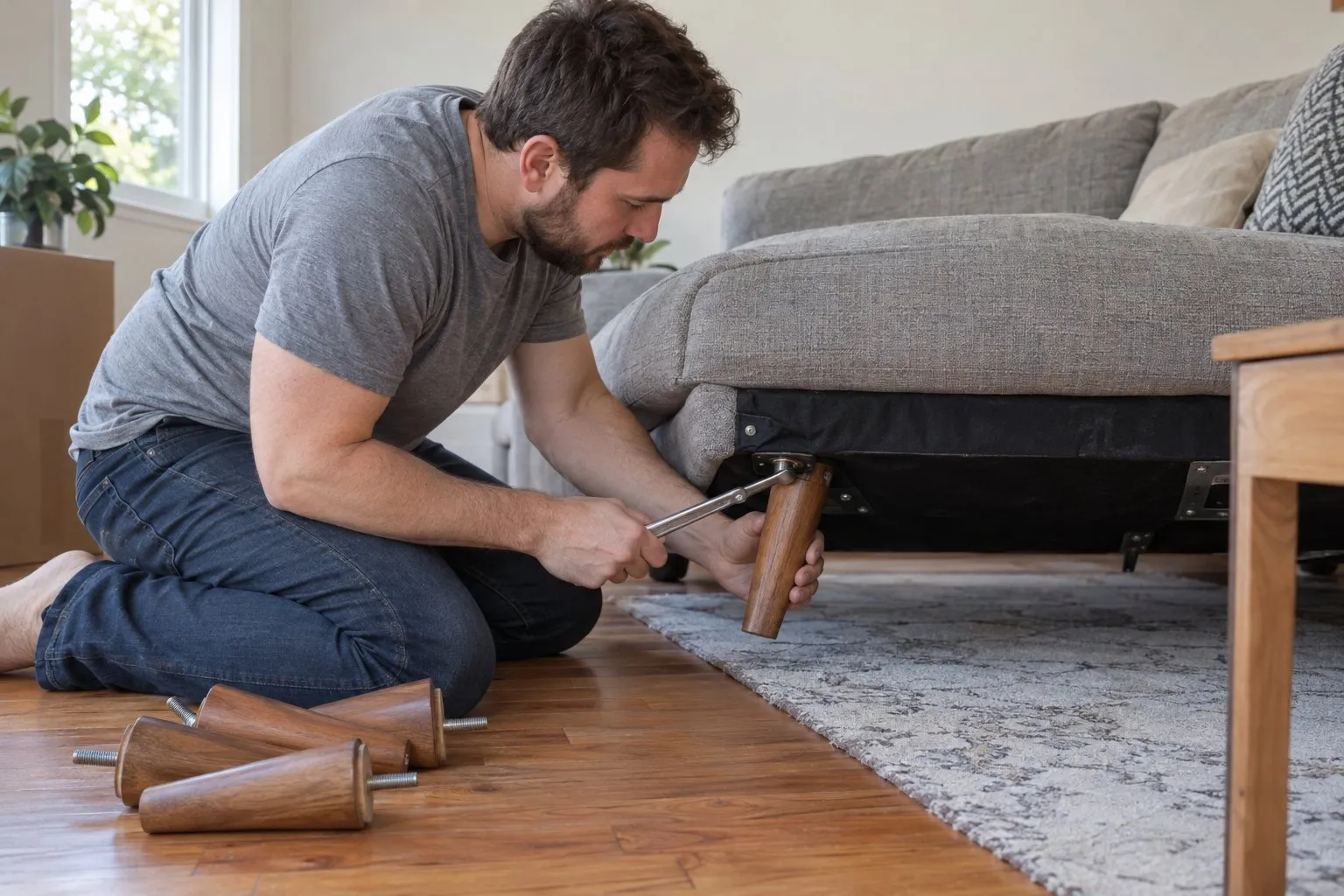
1. Remove the Legs and Any Detachable Cushions
Most couch legs either unscrew by hand or come off with a wrench. Set cushions aside; loose cushions and pillows can usually go out with regular bulk trash without any cutting at all, which immediately reduces what you need to break down.
2. Separate Sectional Pieces
If you have a sectional, look for connector brackets or clips, usually along the underside where sections meet. These are typically held with a single bolt or a hook-and-loop bracket system and come apart in minutes.
3. Strip the Fabric Cover
Use a flathead screwdriver or staple remover to pull back the fabric covering the frame, particularly around the base and arms. This exposes the frame and makes it obvious whether you are dealing with wood, metal, or a mix of both.
4. Cut Out the Foam and Padding
Foam cushions and padding can usually be cut into smaller sections with a serrated knife or utility knife. Many waste haulers accept foam separately from frame material, so check local rules before bagging it.
5. Break Down the Frame
Wood frames typically come apart at glued or screwed joints; a reciprocating saw makes quick work of anything that won't unscrew. Metal frames, common in sleeper sofas, need a metal-cutting blade. Cut the frame into sections no longer than your hauler's stated size limit.
Is It Worth Disassembling a Couch Yourself, or Hiring It Out?
Doing it yourself saves on hauling fees but costs real time, and a couch with a metal sleeper frame or heavy wood construction can take an hour or more to break down safely. If the couch is part of a larger move-out where other furniture, boxes, and debris also need to leave the home, it often makes more sense to have the removal handled alongside everything else rather than tackling it item by item.
This is especially true if you are also clearing out a mattress, old appliances, or multiple pieces of furniture at once. At that point, the question isn't really how to take apart one couch, it's who handles bulky or awkward furniture removal efficiently so the rest of the move isn't delayed waiting on curb pickup schedules. Our specialty moving services cover exactly this kind of situation, where bulky or awkward items need careful handling rather than a generic haul-away.
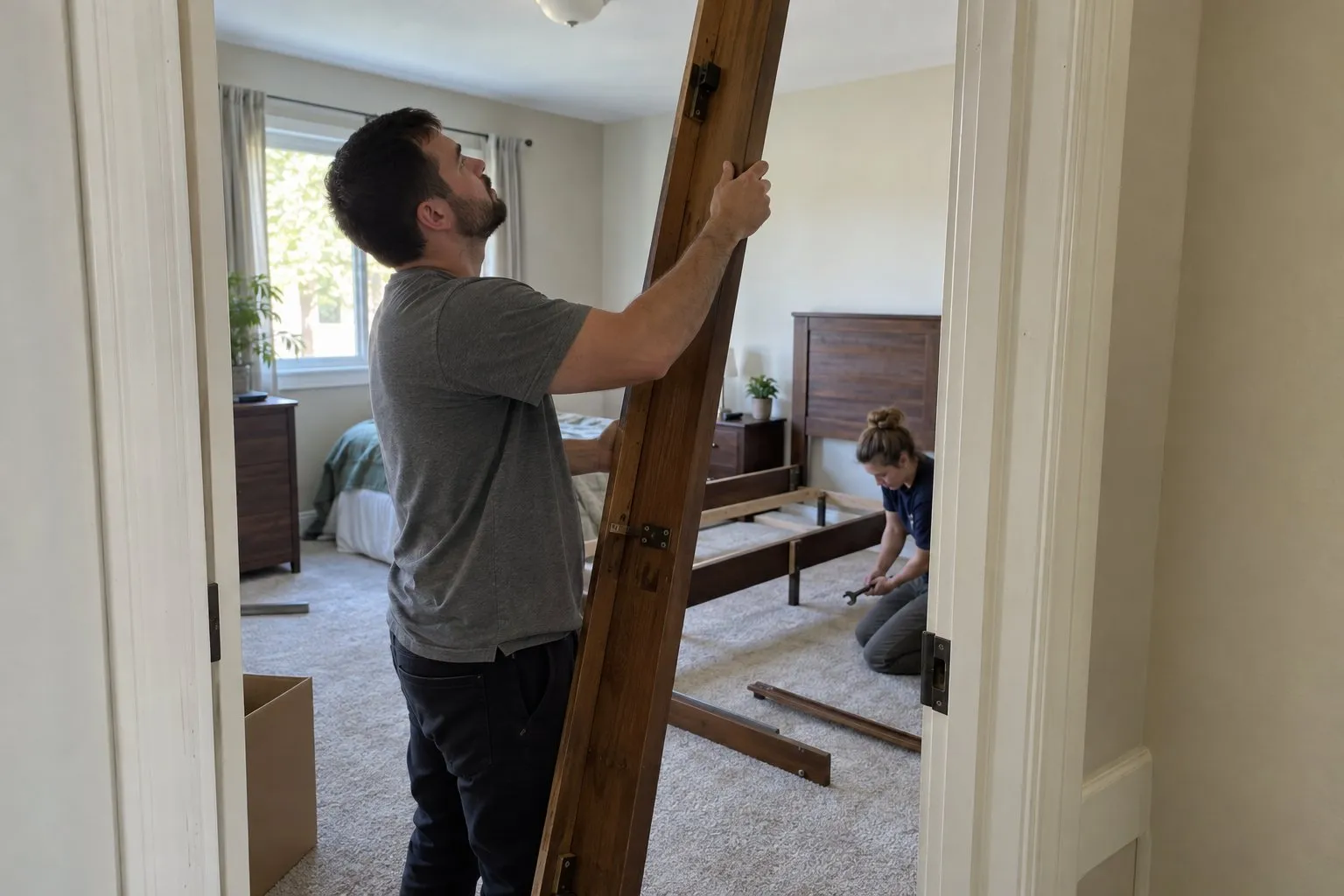
If disassembly is happening because you're preparing for an actual move rather than a straight disposal job, it's worth deciding early which pieces are worth transporting versus leaving behind. For general guidance on which furniture survives a move well, our guide to taking furniture apart for a move covers the broader process, including pieces you're keeping rather than discarding.
What to Do With the Pieces Once the Couch Is Apart
Separate materials where you can: wood and metal frame pieces often qualify for scrap or bulk pickup, fabric and foam may need to go in regular trash bags depending on local rules, and intact cushions or a frame in decent shape can sometimes be donated instead of thrown out entirely. Many donation centers will not accept a couch with rips, stains, or odor, so check condition honestly before loading it into a vehicle.
A couch is rarely the only large item that needs to leave a home during a move-out. If you're also dealing with an old mattress or other bulky furniture at the same time, it's worth planning disposal for everything together rather than making separate trips.
Common Mistakes When Breaking Down a Couch for Trash
The most common mistake is cutting the frame before checking local size rules, which can mean redoing the work if pieces still come out too large. A close second is skipping the fabric removal step and trying to cut straight through covered foam, which dulls blades fast and hides staples that can cause injury.
People also frequently forget to confirm pickup scheduling before doing the work, leaving cut-up couch pieces sitting in a garage or driveway for days. Call ahead, confirm the date, and time the teardown so the pieces aren't sitting out longer than necessary. If the timeline is tight because a move is already scheduled, it's often faster to request a moving quote and have the removal folded into the larger job.
Frequently Asked Questions
Can you just cut a couch in half to throw it away?
Cutting a couch in half can work for soft, foam-heavy sofas, but most couches have an internal wood or metal frame that needs to be cut separately, not just sliced through the middle. Removing the fabric first to expose the frame gives you a cleaner, safer cut.
Will my trash company pick up a disassembled couch?
Most will, as long as the pieces meet their bulk item size and weight limits and are set out on the scheduled bulk pickup day. Rules vary by city, so confirm size limits and whether a sticker or appointment is required before cutting anything down.
Do I need to remove the fabric before cutting a couch frame?
It helps significantly. Fabric left in place hides staples and padding that can dull saw blades and create a safety hazard, and most haulers find it easier to haul separated materials rather than a fabric-wrapped frame chunk.
What's the easiest part of a couch to remove first?
Legs and loose cushions. Both typically detach without tools or with just a screwdriver or wrench, and removing them first makes the remaining frame significantly lighter and easier to maneuver.
Is it cheaper to disassemble a couch myself or pay for junk removal?
Doing it yourself avoids a hauling fee but takes real time and tools, especially with metal-frame sleeper sofas. If you already have other furniture or moving debris to clear out, bundling the couch into a single removal job is often more efficient than handling it separately.
Let's Get Your Move on the Calendar
Moving to a new home or relocating your business? Whether you're staying in Metro Detroit or moving farther away, Advanced Technical Moving can help you plan the details. Reach out today for a free estimate.