
Moving Tips
Moving Day Checklist: What to Do the Morning Of, Room by Room
Written by:
Advanced Technical Moving Team
Published:
November 4, 2026
A moving day checklist for the morning of your move: what to confirm, pack last, and protect before the truck arrives, plus a timeline to keep things moving.
A moving day checklist works best when it is broken into two parts: what has to happen before the truck shows up, and what has to happen once it does. Most of the stress on moving day comes from small tasks that got skipped the night before, not from the heavy lifting itself. Having a short list for each room, plus a rough timeline for the day, keeps everyone moving instead of standing around waiting on one unfinished task.
This checklist assumes you already have your boxes mostly packed and your move booked. It focuses on the last stretch: the morning of, the walkthrough before the crew arrives, and the handful of things people forget until it is too late to fix them easily.
What Should You Do the Night Before Moving Day?
The night before, finish any packing that is still open, set aside a box of essentials, and confirm your start time with whoever is moving you. Doing this the night before, not the morning of, means your morning is just a walkthrough instead of a scramble.
- Pack a first-night box. Toiletries, chargers, a change of clothes, basic tools, and any medication. Keep it separate from everything else so it does not end up buried in the truck.
- Charge everything. Phones, power banks, and anything with a battery that you will need before you can unpack chargers again.
- Set aside paperwork. Lease or closing documents, ID, and any paperwork related to the move itself. Keep this with you, not in a box.
- Confirm arrival time and parking. A quick call or text the night before catches any change in plans while there is still time to adjust.
What Belongs on a Room-by-Room Moving Day Checklist?
Each room needs a quick final pass the morning of the move: check drawers, closets, and any spot that is easy to overlook when you are focused on the obvious furniture. Working room by room instead of randomly keeps you from backtracking through the house.
Kitchen
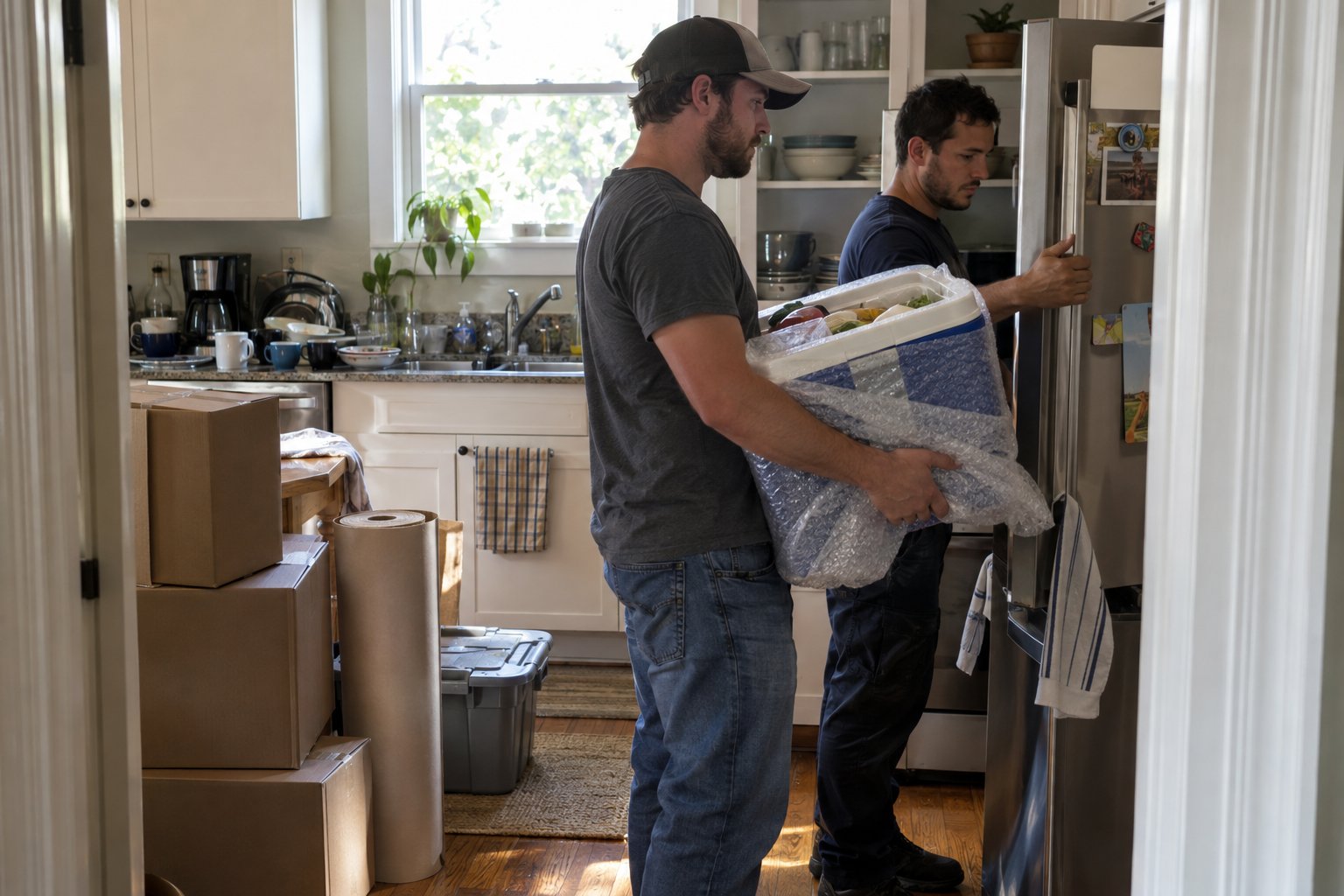
- Empty the fridge and freezer the night before if possible; perishables rarely survive a move well.
- Unplug and prop open the fridge and dishwasher once empty, so they air out during transport.
- Set aside any dishes or coffee gear you want on hand immediately after arrival.
Bedrooms
- Strip bedding and pack it in a clearly labeled bag.
- Check under the bed and inside nightstands, two spots people routinely forget.
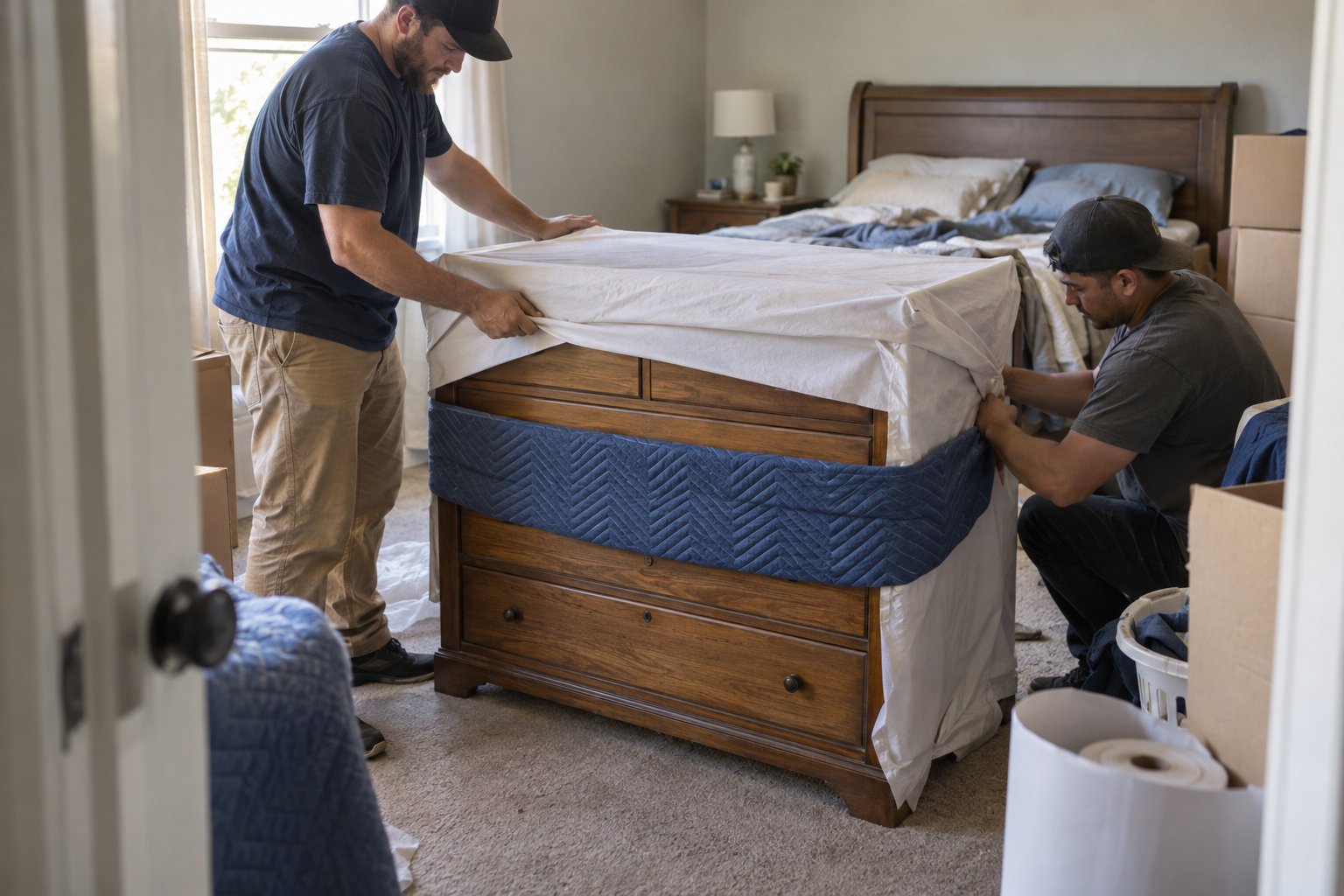
- Confirm whether dressers are being moved with drawers in or emptied; let the crew know which you expect.
Bathrooms
- Pack daily toiletries last, into the essentials box, not a sealed moving box.
- Check cabinets above and below the sink, which get missed more than any other storage spot in the house.
Living Areas and Garage
- Clear a path to the front door and any exterior stairs before the crew arrives.
- Set aside tools, sports equipment, or anything stored loosely that still needs a box.
- Note anything heavy or awkward, like a large bookshelf or workbench, so it is not a surprise once lifting starts.
How Do You Prepare the Home Itself Before Movers Arrive?
Preparing the home means protecting floors and doorways, clearing walkways, and making sure large furniture can actually get out the door it needs to. This is separate from packing boxes, and it is the part that saves the most time once the crew is on site.
- Measure doorways for large pieces if you have not already, so nobody discovers a tight turn mid-lift.
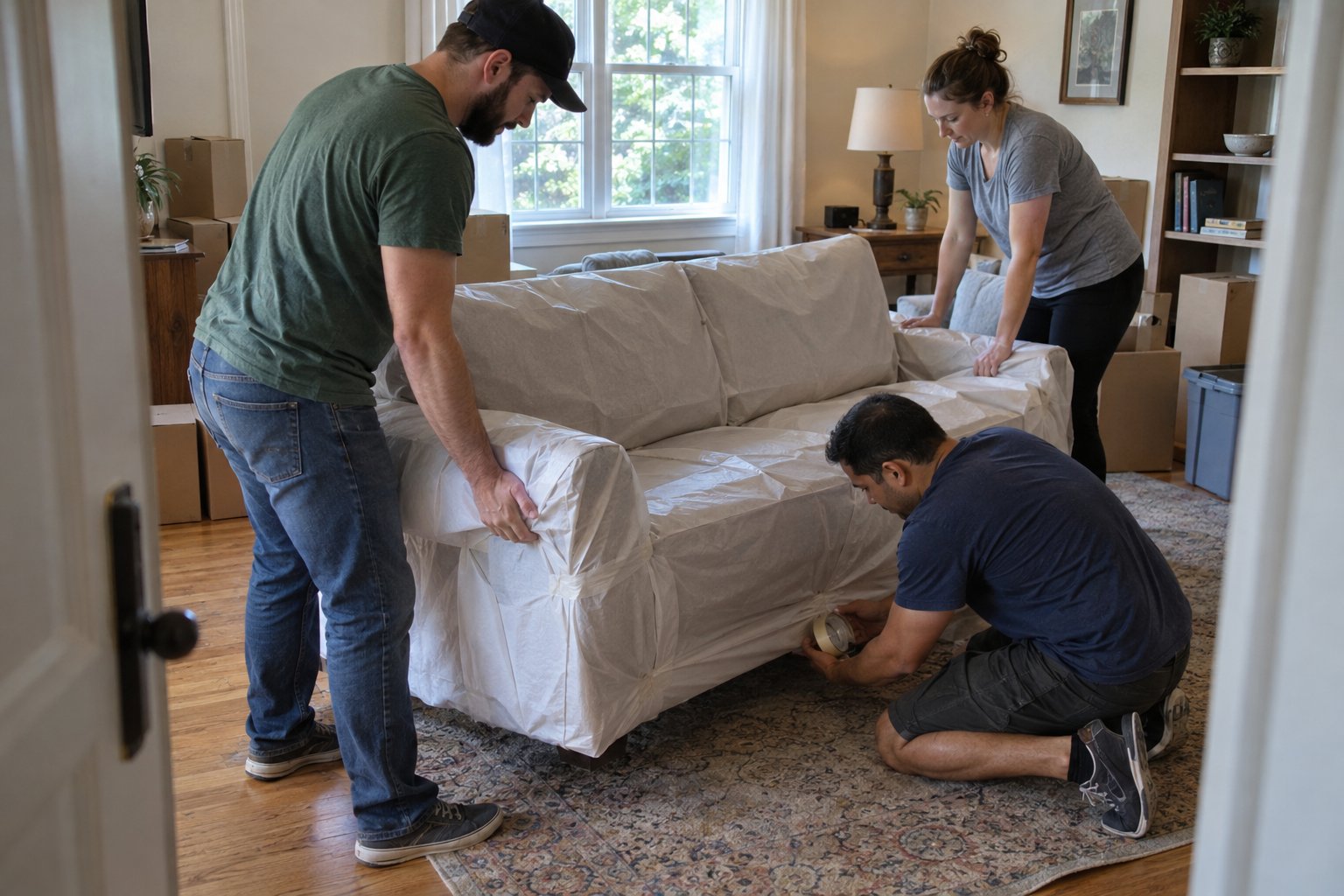
- Protect floors in high-traffic paths, especially hardwood or light carpet, with towels, cardboard, or furniture pads.
- Clear the driveway and curb so the truck has room to park close to the door.
- Secure pets in a closed room, a carrier, or with a sitter. An open front door and a nervous pet are a bad combination on moving day.
- Take photos of electronics setups behind the TV or desk before anything gets unplugged, so reassembly later is simple.
If you are using professional packing services rather than packing everything yourself, confirm the night before which rooms are already done and which still need attention, so there is no confusion when the crew walks in.
What's a Reasonable Moving Day Timeline?
As a rule of thumb, plan for roughly an hour of loading per room of furniture, more if stairs or a long carry to the truck are involved. That is not a hard number, but it helps you set a realistic expectation instead of guessing.
- Morning: Final walkthrough, essentials box set aside, paths cleared, crew arrives.
- Loading: Furniture and boxes go out in an order that makes sense for the truck, usually larger pieces first.
- Final walkthrough: Check every closet, cabinet, and drawer once the truck is loaded, before anyone leaves the old address.
- Unloading: Boxes and furniture go into the new place, ideally with rooms already labeled so things land close to where they belong.
If your move is local, within the same general area, this timeline is usually straightforward and finishes in a single day. For moves involving stairs, tight parking, or a long distance between the old and new address, build in extra time rather than assuming the best case.
What Should You Double-Check Before the Crew Leaves?
Before the truck pulls away from the old address, walk every room one more time, including closets, cabinets, and any attic or basement storage. This is the last chance to catch anything left behind without a second trip.
- Check that all doors and windows are locked and any keys or garage openers are where they need to be.
- Confirm utilities are scheduled to shut off or transfer as planned.
- Take a final look in the garage, shed, or any outdoor storage, which get skipped more often than rooms inside the house.
It also helps to have already filed a change of address with USPS before moving day, so mail starts forwarding without a gap. Combine that with your own list of who needs your new address: banks, subscriptions, and anyone else you deal with regularly.
If your new home is in Oakland County or West Bloomfield, the same checklist applies regardless of distance. The details that cause delays, like a narrow stairwell or a cluttered garage, are specific to the house, not the city.
What If Something Doesn't Fit the Plan?
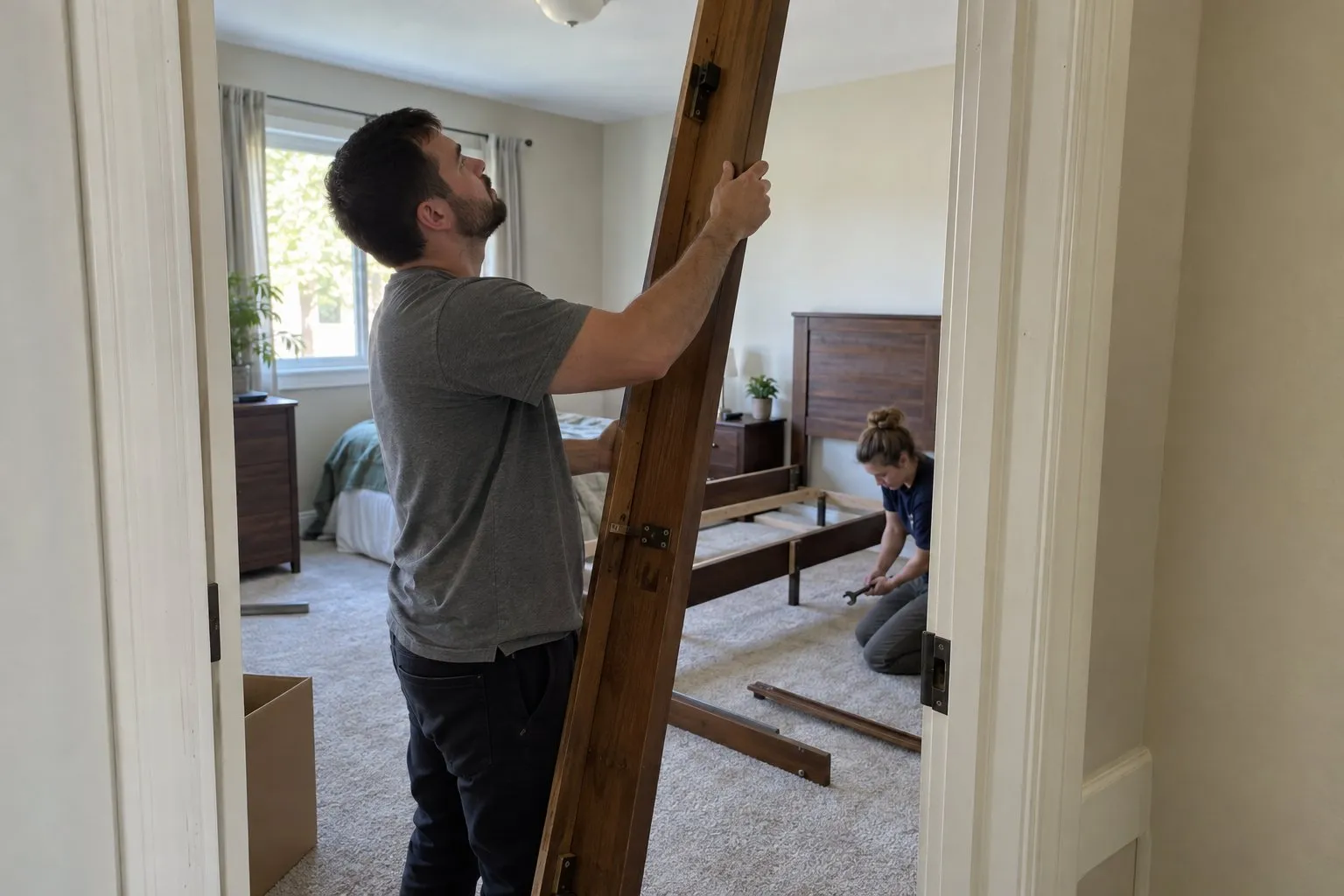
If a piece of furniture turns out to be too large for a doorway or a hallway turn, stop and reassess rather than forcing it. Taking a table apart or removing a door from its hinges takes a few extra minutes and carries far less risk than a damaged wall or a damaged piece of furniture.
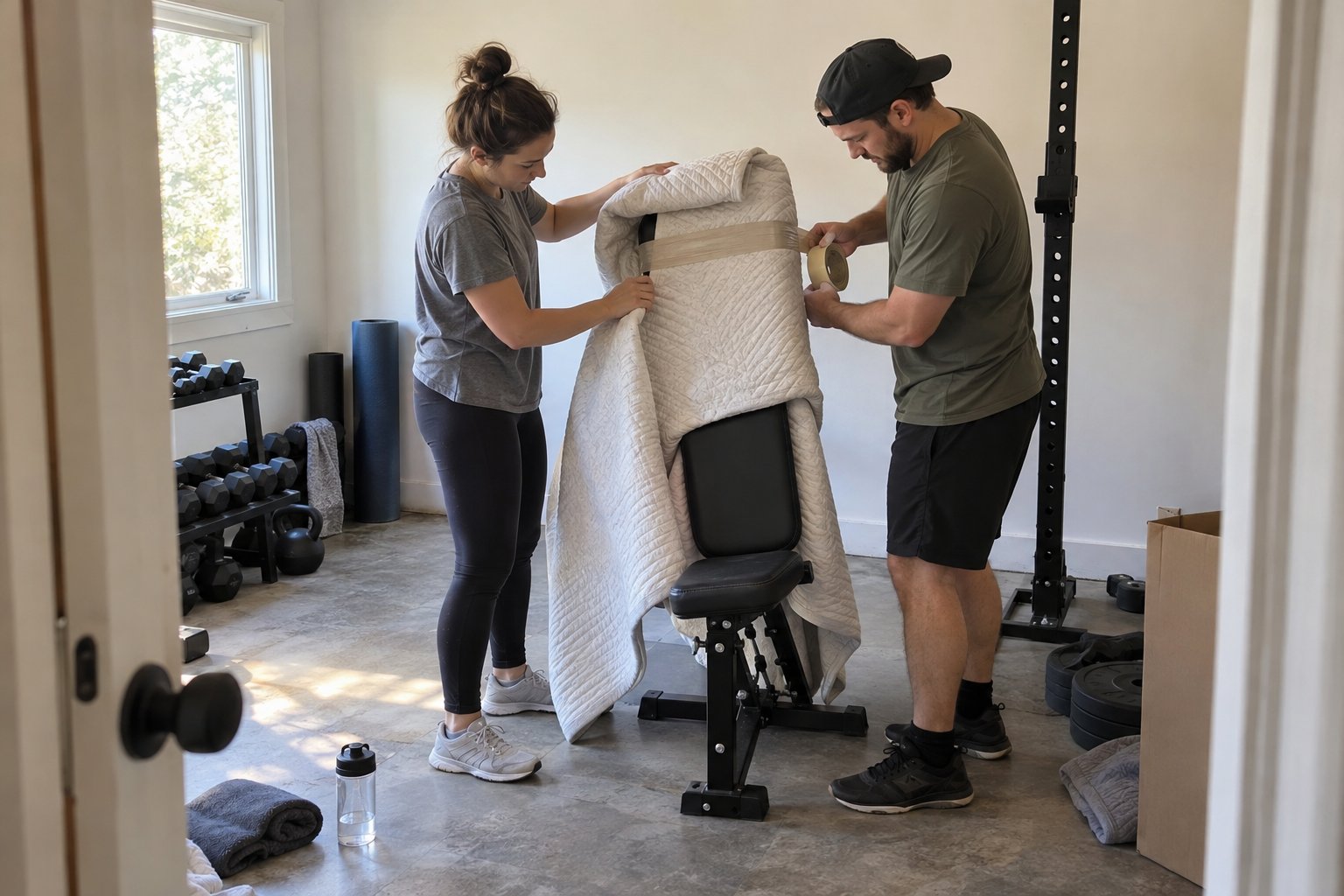
If you are moving something unusually large or awkward, like a piece that needs to be taken apart and put back together, it is worth planning for that ahead of time rather than discovering it on the day. Our team handles large and specialty item moving service for exactly this kind of situation.
Frequently Asked Questions
Planning your move? Request a quote from Advanced Technical Moving.
Frequently Asked Questions
How far in advance should I pack the essentials box for moving day?
Pack it the night before, not the morning of. That way it is one less thing to think about when the crew arrives, and you are not digging through sealed boxes later looking for a phone charger or toothbrush.
Do I need to be home the entire time movers are loading the truck?
It helps to be available for questions and the final walkthrough, but you do not need to stand over every box. Many people use the loading window to do a last check of closets, cabinets, and storage areas.
What should I tell the crew about my home before they start loading?
Mention anything unusual: a narrow staircase, a door that sticks, tight parking, or furniture that needs to come apart. The more the crew knows before lifting starts, the fewer surprises come up mid-move.
Should appliances be unplugged the night before or the morning of a move?
Unplug the fridge and freezer the night before so they have time to defrost and dry out. Other appliances like the washer and dryer can usually wait until the morning, just before loading begins.
What's the best order to load a truck on moving day?
Larger, heavier furniture generally goes in first, with boxes and smaller items filling in around them. Your crew will usually have a preferred order based on the specific pieces involved, so it is worth letting them lead.
Let's Get Your Move on the Calendar
Moving to a new home or relocating your business? Whether you're staying in Metro Detroit or moving farther away, Advanced Technical Moving can help you plan the details. Reach out today for a free estimate.